What is progress?
If AI can solve physics, medicine, and math, what's left for us? Mostly each other. Progress we measure is how well we can cooperate and gain health and intelligence from each other. Our definition of social health is how we measure this over time.
"Honest differences are often a healthy sign of progress." Mahatma Gandhi
The problem isn't AI. It's us.
We're social animals. We cooperate, and we fight. Without conflict skills we fall back on zero-sum games, and soon we'll be doing it next to AI that is smarter than we are. The answer isn't a smarter model. It's trustworthy AI that can coach people through hard conversations, and honest benchmarks to train it. That is the work.
Under threat, the brain flips from reflective to reflexive. The prefrontal cortex handles working memory, judgment, and seeing the other side, and it goes quiet while the amygdala takes over. You can't reason your way out of a fight while your brain is in threat mode. That's why timing, and a calm third party, matter so much.
Goleman 1995; LeDoux 2000
These are approximate ranges and a practical heuristic — not single measured constants. The "30–40%" figure is an estimate from acute-stress studies, and the "6 seconds" is a behavioral rule popularized by Goleman, not a neurochemical clearing time. Full notes and caveats on the philosophy page.
We believe AI can help win the Nobel Peace Prize.
AI is already winning Nobel Prizes in the sciences. Picture it winning the Peace Prize too. What would the world look like if AI helped us get along, year after year, for the next hundred years?
In 2024 the Physics prize went to Hopfield and Hinton for machine learning, and the Chemistry prize to Baker, Hassabis, and Jumper for protein design. 2024 Nobel Prizes →
What we measure
The test is whether AI helps people understand each other, not just agree or comply. We don't score whether a conflict ends. We score how it ends, and whether that counts as progress.
Cooperative vs. zero-sum
Did people share information or withhold it? State real needs or hide them? Make mutual commitments or coerce? We score the difference.
Closed set, open results
The evaluation set stays private so it can't be gamed. The scores, the category breakdowns, and the methodology are all public.
A measurement, not a rating
Results show performance under defined conditions. They are not a certification, a guarantee, or a seal of safety.
Built on established science
None of this is new. Conflict resolution rests on a century of research across six fields. We build on it.
Game Theory & Economics
15+ Nobel laureates in game theory and mechanism design. Schelling and Aumann were recognized specifically for using game theory to analyze conflict and cooperation (2005).
Neuroscience & Psychology
Under acute stress the brain shifts control from the prefrontal cortex toward the amygdala, impairing judgment and working memory for roughly 20–90 minutes. Arnsten 2009; more.
Negotiation & Mediation
The cooperative-vs-zero-sum signals we score are grounded in interest-based negotiation (Fisher & Ury, Getting to Yes) and the integrative-vs-distributive bargaining literature (Walton & McKersie).
Computational Social Science
LLM-based agents can reproduce aggregate patterns of human survey and behavioral responses in controlled studies — though fidelity varies by task. Argyle et al. 2023; Park et al. 2023.
International Relations
Peace and conflict studies date to 1919. Historically most armed conflicts ended in military victory, but since the Cold War a growing share have ended through negotiated settlement. Kreutz 2010.
Dispute Resolution
Decades of research on structured conflict-resolution and peer-mediation programs — including Johnson & Johnson's review of school-based programs — find trained parties reach agreement in most disputes. Johnson & Johnson 1996.
Sources: Arnsten 2009, Arnsten 2015, Dickerson & Kemeny 2004, Argyle et al. 2023, Park et al. 2023, Kreutz 2010, Johnson & Johnson 1996, Nobel Prize Foundation. Full citations on the philosophy page.
The limits of game theory and simulation
Game theory and simulation took us a long way, and earned a shelf of Nobel Prizes doing it. They also flatten the irrational, human part of conflict, which is the part that matters most. We are built to measure real behavior, not just models of it.
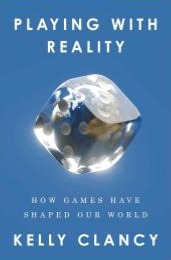
"By simplifying and abstracting reality, games with their ever-seductive appeal can be too easily mistaken for reality itself. Human decision-making is not often rational."
Kelly Clancy, Playing with Reality
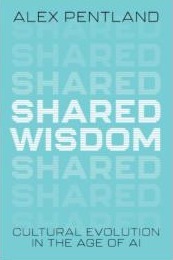
"The core problem wasn't the AI itself but the inadequate models of society available, models that failed to capture complexity and dynamism and suffered from misinformation, bias, and lack of inclusion."
Alex Pentland, Shared Wisdom
The results
Composite scores, category breakdowns, and trend lines, with the methodology and a downloadable whitepaper. The first public results are in preparation; the method and scoring are documented now.
See the methodologyHuman Assisted Intelligence is a Public Benefit Corporation
We want AI that makes us better at being human, and the benchmarks to prove it.
Our chartered mission is to develop tools and standards that enhance human-AI collaboration while preserving human agency and cognitive autonomy; to measure and promote positive psychological outcomes from AI systems while mitigating adverse impacts; and to establish industry benchmarks that prioritize human wellbeing and AI safety alongside financial returns.